Solar-Powered Classroom Cooling
A low-cost, window-mounted cooling concept for classrooms in northern Ghana, using solar power and locally available materials.
- My role
- Team lead · Three-person team
- Status
- Developed concept · Not yet physically prototyped
- When
- August 2026
- Outcome
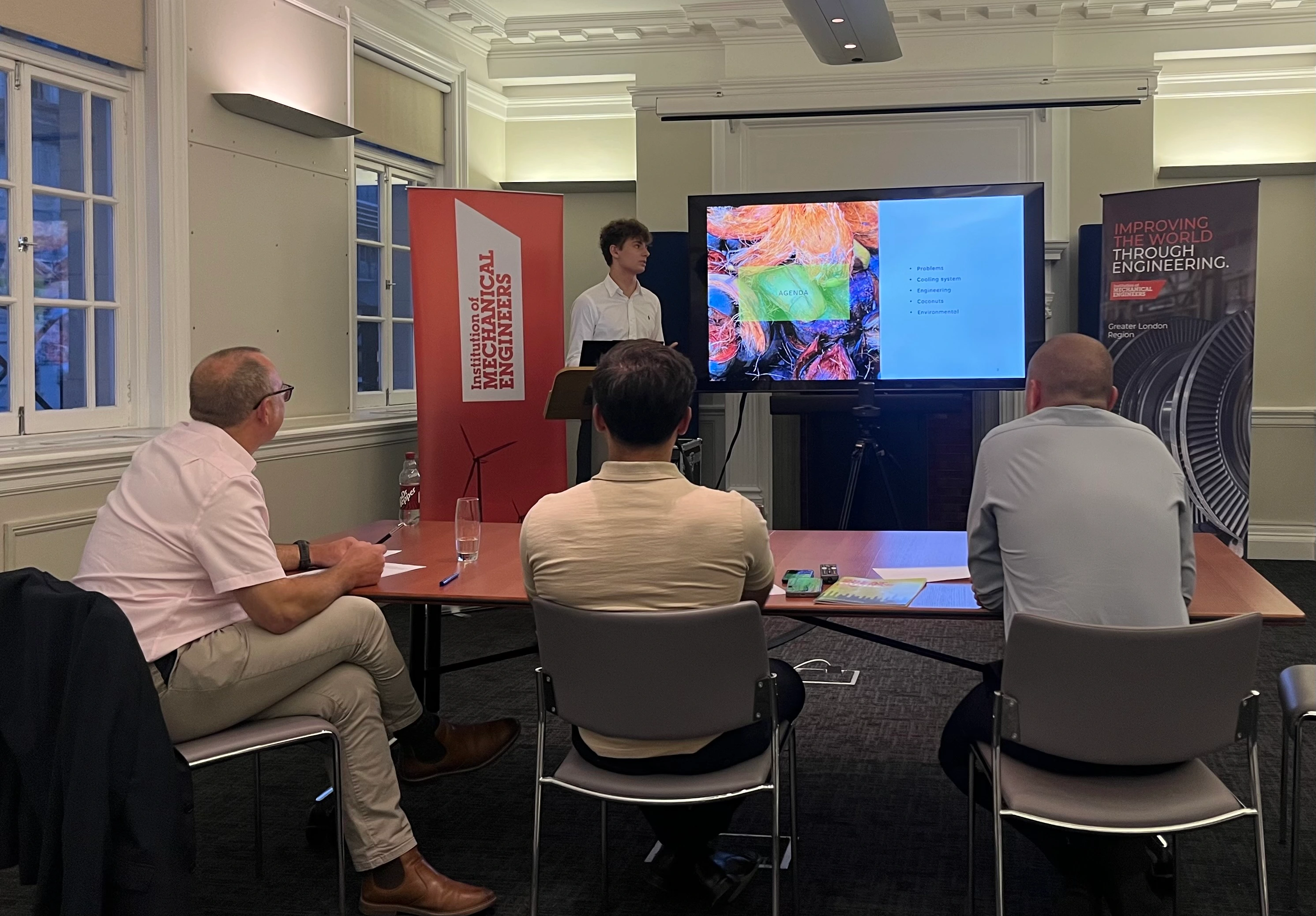
- 1st place · IMechE Speak Out for Engineering, Greater London heat
The challenge
Classrooms in northern Ghana experience extreme heat, unreliable electricity and limited ventilation. A University of Ghana study recorded indoor classroom temperatures reaching 39.8°C, with some metal-roofed classrooms nearly 6°C hotter than outside.
Conventional air conditioning was too expensive and energy-intensive for our target communities. We needed a solution that could operate independently of the grid, be affordable to install and be maintained locally.
My contribution
I led a three-person team developing the concept for Schneider Electric Go Green. Our work brought together technical research, component selection, energy calculations, cost analysis and community feedback.
I later presented the proposal at the IMechE Speak Out for Engineering Greater London heat.
A window-mounted system
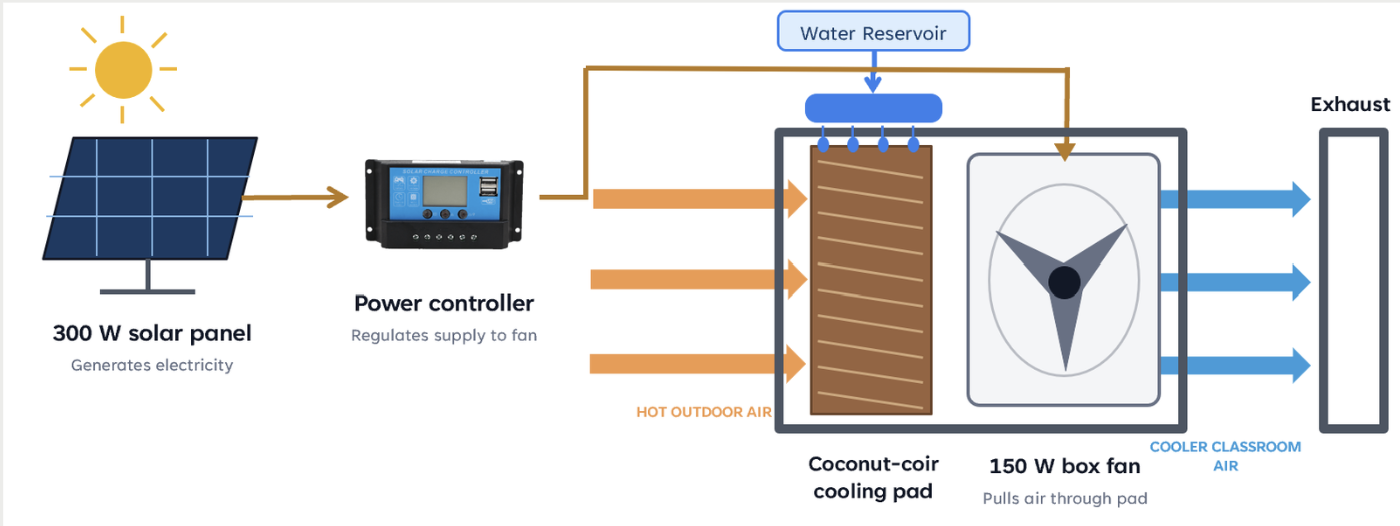
The design fits into an existing classroom window. A fan draws outdoor air through wet coconut-coir pads, cooling it through evaporation. An open window or door on the opposite side allows humid air to escape.
Coconut-coir pads
Absorb water and cool incoming air through evaporation.
Gravity-fed reservoir
Keeps the pads wet without an electric pump.
150 W DC fan
Draws outdoor air through the pads and into the classroom.
300 W solar panel
Proposed power supply with MPPT-based regulation and no battery storage.
Engineering decisions
Evaporative cooling instead of AC
Northern Ghana’s hot, dry-season climate makes evaporative cooling a practical option. It requires less electricity than refrigeration-based cooling, although its performance decreases as humidity increases.
Coconut coir instead of commercial pads
We investigated coconut coir because it is biodegradable, potentially locally sourced and inexpensive to replace. A 2017 experimental study reported up to 85% cooling effectiveness and a 4°C temperature reduction under its test conditions. These are published research results, not measurements from our design.
Solar power without batteries
A 150 W fan running for an eight-hour school day would consume approximately 1.2 kWh. We proposed a 300 W panel to accommodate conversion losses and variable sunlight. Removing batteries reduces cost and maintenance, but limits operation when sunlight is insufficient. The proposed sizing still needs to be tested.
Designing for local conditions
We contacted School for Life, an organisation working with schools in Ghana. Their feedback highlighted varying classroom window dimensions and the need for cross-ventilation to control humidity. This influenced our installation concept and the use of replaceable cooling pads.
Outcome and next steps
I won first place at the IMechE Speak Out for Engineering Greater London heat and qualified for the national final in Glasgow.
Our preliminary cost estimate was £250–£400 per classroom, with approximately £20 in annual maintenance. These are design estimates; the system has not yet been physically prototyped.
The next step would be building and testing a prototype to validate cooling performance, power requirements and long-term reliability.

First prize
IMechE Greater London local competition heat
Download certificate ↓Full Project Documentation
The complete original proposal, including research and references.